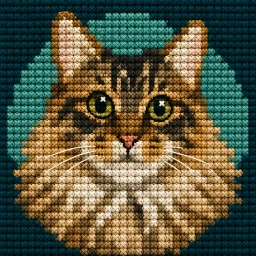

Quick answer: Skeina matches each chart color to a real DMC stranded cotton number, counts its stitches, estimates thread length for two-strand full crosses, adds a 15% allowance for starts, ends, and waste, then rounds up to whole 8 m skeins.
Why screen color and thread color are different
A photo can contain millions of RGB colors. Embroidery floss comes in a fixed palette, and the stitched result is affected by fabric, lighting, strand count, and nearby colors. Pattern software therefore looks for the closest practical thread color rather than reproducing every digital pixel exactly.
Skeina compares colors perceptually, then assigns the selected pixels to DMC numbers. The result is a palette you can act on: each entry has a number, name, swatch, symbol, and quantity.
How many colors should a photo pattern use?
There is no universal best number. More colors can make gradients smoother, but they also add confetti stitches, sorting, and frequent needle changes. The right limit depends on the subject, grid size, and patience available.
- Simple graphic subjects: use a small palette with clear contrast.
- Portraits and pets: keep enough midtones for recognizable features.
- Landscapes: preserve colors that separate foreground, middle distance, and sky.
- Small patterns: reduce the palette so each color has room to contribute.
Skeina can use the full available palette, a curated theme such as Grayscale, Sepia, Nature, or Pastels, or a custom selection of threads you own.
How Skeina estimates thread
The estimate is based on the stitch count for each color and the selected fabric count. Lower-count fabric makes physically larger crosses, so each stitch uses more thread. Skeina assumes full cross stitches with two strands, adds 15% for starts, ends, and normal waste, and converts the result into whole 8 m skeins.
Why it is still an estimate
Real usage changes with railroading, loop starts, carried thread, tail length, tension, mistakes, and how economically you move between areas. Dye lots can also vary, so buying all skeins for a large continuous color area at the same time is sensible.
Use the legend before shopping
Sort the palette by usage and look at the dominant colors first. A high stitch count spread across the pattern may require more working length than a compact block. Buy the calculated whole skeins, then consider one extra skein for dominant colors when a dye-lot mismatch would be noticeable or when your stitching method uses generous tails.
What the pattern legend should tell you
- DMC number and color name
- A unique chart symbol
- Number of full cross stitches
- Estimated thread length in meters
- Whole skeins to buy
The same information appears in Skeina’s on-screen color list and exported PDF, so the materials plan stays with the chart.